The Age of the 1-Minute Expert: Why Real Experience Is Becoming Invisible (GR/EN)
The Age of the 1-Minute Expert: Why Real Experience Is Becoming Invisible (GR/EN)
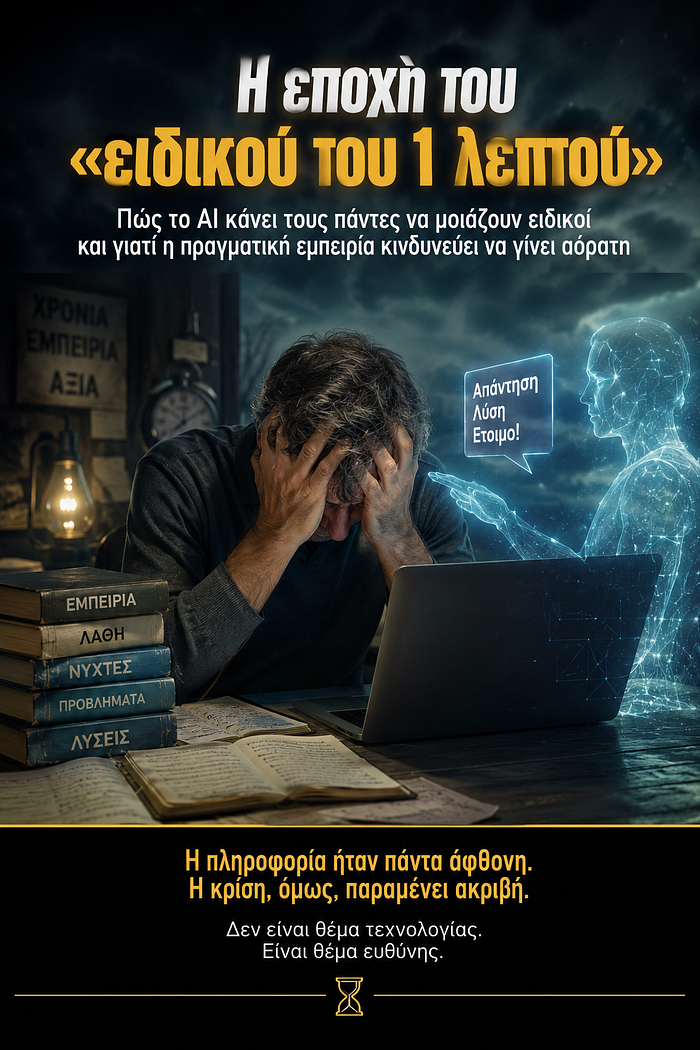
Η εποχή του «ειδικού του 1 λεπτού»
Πώς το AI κάνει τους πάντες να μοιάζουν ειδικοί και γιατί η πραγματική εμπειρία κινδυνεύει να γίνει αόρατη
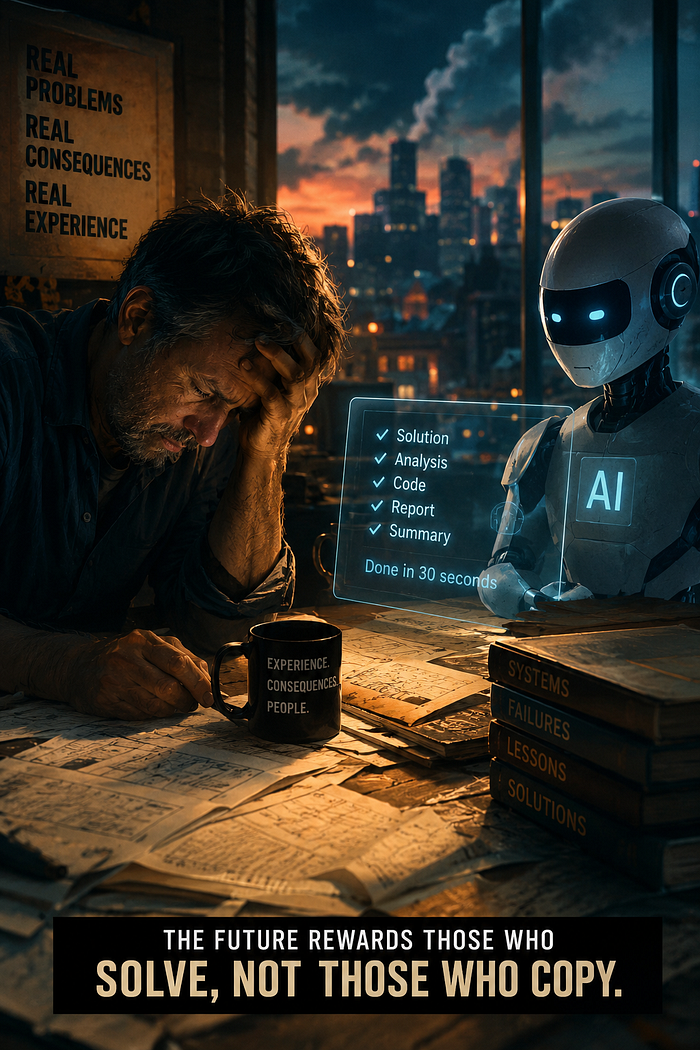
Πριν από λίγα χρόνια, αν ήθελες να έχεις ουσιαστικό λόγο και άποψη σε έναν εξειδικευμένο τομέα, υπήρχε ένα τίμημα που έπρεπε να πληρώσεις: χρόνια σπουδών, αμέτρητες νύχτες άγχους, αποτυχίες που σε πλήγωσαν και μια σιωπηλή, βασανιστική τριβή με το αντικείμενο. Έπρεπε να «φας τα μούτρα σου» για να αποκτήσεις εκείνη την εσωτερική, σχεδόν ενστικτώδη αίσθηση του πώς λειτουργούν τα πράγματα, ακόμη κι όταν τα δεδομένα είναι ελλιπή ή αντιφατικά.
Σήμερα, τα πράγματα είναι διαφορετικά. Αρκούν μια καλή σύνδεση στο διαδίκτυο, λίγα δευτερόλεπτα και ένα σωστό prompt.
Ζούμε στην εποχή του «ειδικού του ενός λεπτού». Χάρη στα Large Language Models, σχεδόν οποιοσδήποτε μπορεί να συντάξει ένα πειστικό κείμενο, να γράψει δομημένο κώδικα, να αναλύσει οικονομικά στοιχεία ή να προτείνει λύσεις που ακούγονται επαγγελματικές. Το AI χάρισε σε εκατομμύρια ανθρώπους το γλωσσικό και τεχνικό περίβλημα της αυθεντίας.
Αυτό όμως δεν είναι το ίδιο με την εμπειρία.
Πίσω από αυτή τη νέα πραγματικότητα κρύβεται μια βαθιά, σιωπηλή κόπωση. Και κυρίως, ένας νέος φόβος που βιώνουν πολλοί άνθρωποι με πολυετή επαγγελματική πορεία.
Για κάποιον που έχει αφιερώσει δεκαετίες σε ένα αντικείμενο, η καθημερινότητα στην εποχή του AI έχει αποκτήσει μια ιδιόμορφη υπαρξιακή διάσταση. Δεν είναι μόνο ότι η δουλειά του αλλάζει ή ότι απειλείται οικονομικά. Είναι η αίσθηση ότι η βαθιά γνώση του γίνεται ολοένα και πιο δύσκολα ορατή.
Φαντάσου να έχεις παλέψει επί χρόνια με τα σπλάχνα ενός πολύπλοκου συστήματος, να γνωρίζεις κάθε κρυφή παγίδα επειδή κάποτε πλήρωσες ακριβά το τίμημα των λαθών σου, και σήμερα να βλέπεις κάποιον να ανοίγει ένα chatbot, να πληκτρολογεί μια ερώτηση και μέσα σε λίγα δευτερόλεπτα να παρουσιάζει μια λύση που μοιάζει εξίσου αξιόπιστη — ή ακόμη χειρότερα, πιο σύγχρονη και πιο αποτελεσματική στα μάτια όσων δεν μπορούν να διακρίνουν τη διαφορά.
Το πιο κουραστικό σήμερα δεν είναι η ίδια η δουλειά. Είναι η συνεχής αίσθηση ότι πρέπει να αποδεικνύεις ξανά και ξανά γιατί η εμπειρία εξακολουθεί να έχει αξία.
Ο έμπειρος επαγγελματίας γνωρίζει πόσο περίπλοκος είναι ο πραγματικός κόσμος. Γι’ αυτό διστάζει όταν χρειάζεται, εξετάζει εναλλακτικές, αναζητά τις κρυφές συνέπειες και δεν βιάζεται να δώσει βέβαιες απαντήσεις όταν τα δεδομένα δεν επαρκούν.
Αντίθετα, κάποιος που βασίζεται αποκλειστικά στις απαντήσεις ενός AI χωρίς να διαθέτει το απαραίτητο υπόβαθρο μπορεί εύκολα να αποκτήσει υπερβολική αυτοπεποίθηση. Δεν γνωρίζει τι δεν γνωρίζει. Και αυτό είναι συχνά πιο επικίνδυνο από την ίδια την άγνοια.
Το AI είναι εξαιρετικό στην παραγωγή γνώσης και περιεχομένου.
Δεν έχει όμως βιώσει ποτέ τις συνέπειες μιας λανθασμένης απόφασης. Δεν έχει νιώσει την πίεση όταν ένα σύστημα καταρρέει στην παραγωγή. Δεν έχει περάσει ατελείωτες ώρες κυνηγώντας ένα πρόβλημα που αψηφά κάθε λογική.
Η πραγματική εμπειρία περιλαμβάνει κάτι που δύσκολα καταγράφεται σε δεδομένα εκπαίδευσης: τη σιωπηλή γνώση. Εκείνη που γεννιέται από τη μνήμη, την ευθύνη, τη διαίσθηση και κυρίως από τα λάθη.
Το ανησυχητικό δεν είναι ότι το AI παράγει εξαιρετικές απαντήσεις. Είναι ότι ολοένα και περισσότερο συγχέουμε την παραγωγή μιας πειστικής απάντησης με την πραγματική κατανόηση.
Η πληροφορία έγινε σχεδόν δωρεάν.
Η κρίση όμως παραμένει ακριβή.
Η ψυχολογική κόπωση της συνεχούς άμυνας
Αυτό αφήνει πίσω του μια ύπουλη εξάντληση.
Δεν είναι η κούραση της εργασίας. Είναι η κούραση του να πρέπει συνεχώς να εξηγείς γιατί μια γρήγορη λύση μπορεί να είναι λανθασμένη.
Κάθε φορά που επισημαίνεις ένα πρόβλημα σε μια πρόταση που παρήγαγε το AI, κινδυνεύεις να εμφανιστείς ως ο άνθρωπος που αντιστέκεται στην πρόοδο. Όχι επειδή φοβάσαι την τεχνολογία, αλλά επειδή γνωρίζεις πόσο εύκολα μια μικρή παράβλεψη μπορεί να εξελιχθεί σε μεγάλη αποτυχία.
Ταυτόχρονα, αρχίζει να χάνεται και η χαρά της ίδιας της αναζήτησης. Η σκέψη, η δοκιμή, η αποτυχία και η ανακάλυψη αντικαθίστανται ολοένα και περισσότερο από μια έτοιμη απάντηση λίγων δευτερολέπτων.
Και κάπου εκεί γεννιέται ένας πιο βαθύς φόβος: μήπως η κοινωνία πάψει να ξεχωρίζει εκείνον που ξέρει πραγματικά από εκείνον που απλώς παρουσιάζει πειστικά αυτό που του πρότεινε μια μηχανή.
Το πρόβλημα δεν είναι το AI.
Το πρόβλημα είναι ο τρόπος με τον οποίο αξιολογούμε την αξία.
Αρχίζουμε να επιβραβεύουμε περισσότερο την ικανότητα παραγωγής πειστικών απαντήσεων παρά την ικανότητα ανάληψης ευθύνης όταν αυτές αποδειχθούν λανθασμένες.
Το AI αποτελεί έναν εξαιρετικό επιταχυντή για όσους διαθέτουν ήδη γνώσεις και εμπειρία. Στα χέρια τους λειτουργεί ως πολλαπλασιαστής παραγωγικότητας και δημιουργικότητας.
Μπορεί όμως να γίνει και παγίδα εφησυχασμού όταν χρησιμοποιείται ως υποκατάστατο της σκέψης αντί ως εργαλείο υποστήριξής της.
Η μεγάλη πρόκληση της εποχής μας δεν είναι να πολεμήσουμε την τεχνολογία.
Είναι να μη συγχέουμε την πληροφορία με τη γνώση, την ευχέρεια στην έκφραση με την κρίση και την ταχύτητα με τη σοφία.
Η πληροφορία δεν ήταν ποτέ τόσο άφθονη.
Η κρίση, όμως, εξακολουθεί να αποκτάται με τον ίδιο δύσκολο τρόπο: μέσα από τον χρόνο, την ευθύνη, τα λάθη και την εμπειρία.
Και όσο αυτή η διαφορά παραμένει αόρατη, τόσο μεγαλύτερος θα είναι ο κίνδυνος να οικοδομήσουμε μια κοινωνία που θα ανταμείβει όσους ακούγονται ειδικοί, αντί για όσους μπορούν πραγματικά να λύσουν τα δύσκολα προβλήματα όταν όλα πάνε στραβά.
ΕΝ
The Age of the One-Minute Expert
How AI Makes Everyone Look Like an Expert — and Why Real Experience Is Becoming Invisible
A few years ago, if you wanted to speak with authority in a specialized field — or even beyond one — you had to pay a price: years of study, countless sleepless nights, painful failures, and a long, often brutal immersion in your craft. You had to “learn the hard way” to develop that internal, almost instinctive understanding of how things truly work, even when the data is incomplete, contradictory, or misleading.
Today, things are different.
All you need is a good internet connection, thirty seconds, and a well-crafted prompt.
We are living in the age of the one-minute expert. Thanks to Large Language Models, almost anyone can now produce persuasive arguments, write well-structured code, analyze financial data, or diagnose operational problems with remarkable fluency. AI has given everyone the linguistic and technical appearance of expertise.
But behind this impressive display of knowledge lies something deeper: a quiet exhaustion — and, above all, a new and deeply irrational fear.
For people who have devoted their lives to mastering a profession, the AI era has brought an unexpected existential anxiety. It is not simply that their work has become easier or that their jobs may eventually be threatened. The fear runs much deeper: the constant possibility of being overshadowed by appearances.
Imagine spending decades wrestling with the inner workings of a complex system, knowing every hidden trap because you have personally paid the price for falling into them — only to watch a younger colleague or a manager open a chatbot, type a single question, and, within seconds, present a solution that appears just as good — or worse, one that looks more modern, faster, and more convincing.
Today, the hardest part is no longer the work itself.
It is the exhausting feeling that someone who discovered ChatGPT yesterday might appear to solve a problem faster than you.
This fear does not stem from arrogance.
It comes from experience.
Experienced professionals understand how complex the real world actually is. That is why they hesitate when necessary, question their own assumptions, weigh hidden variables, and search for unintended consequences before reaching a conclusion.
The “one-minute expert,” on the other hand, carries none of that burden. Free from the weight of knowing what can go wrong, they move forward with misplaced confidence, producing polished answers that often impress people who cannot distinguish confidence from competence.
AI is extraordinary.
But it has never experienced the consequences of failure.
It has never felt the knot in its stomach when a production system collapses because of a bad decision. It has never spent days chasing a bug that defies logic. It has never had to stand behind its own decisions when real people bear the consequences.
Real expertise contains something that cannot easily be captured in any dataset: tacit knowledge.
It is the knowledge born from memory, responsibility, intuition, countless mistakes, and years of accumulated judgment.
The danger is not that AI produces excellent answers.
The danger is that we increasingly confuse the ability to generate convincing answers with genuine understanding.
Information has become almost free.
Judgment remains painfully expensive.
This creates a subtle but deeply draining form of fatigue.
It is not the fatigue of doing the work.
It is the fatigue of constantly having to explain why a quick answer may still be the wrong answer.
Every time you point out a flaw in an AI-generated solution, you risk becoming the villain — the person who “doesn’t get it,” who seems stuck in the past, obsessed with details, or resistant to progress.
Yet your caution comes from experience, not fear.
You know how often seemingly minor oversights become major disasters.
At the same time, something else quietly disappears: the joy of discovery itself.
The process of thinking, struggling, experimenting, failing, and finally understanding is increasingly compressed into an instant response generated in seconds.
Eventually, a deeper fear begins to emerge.
Not that AI will replace professionals.
But that society may gradually lose the ability to distinguish between someone who truly understands a problem and someone who simply knows how to ask a machine the right question.
The problem is not AI itself.
The problem is how we choose to evaluate value.
We are beginning to reward the ability to produce convincing answers more than the ability to take responsibility when those answers fail.
For people who already possess deep knowledge, AI is an extraordinary accelerator — a force multiplier that enhances productivity, creativity, and problem-solving.
But for those who use it as a substitute for thinking rather than a tool to support it, AI can become a dangerous source of false confidence.
The challenge of our time is not to fight technology.
It is to stop confusing information with knowledge, eloquence with judgment, and speed with wisdom.
Information has never been more abundant.
Judgment, however, is still earned the same way it has always been: through time, responsibility, failure, and experience.
If we continue to applaud those who merely sound like experts while overlooking those who have spent years learning how to solve problems when everything goes wrong, we risk building a society full of confident voices but short on genuine expertise.
And when the next real crisis arrives, polished answers will not rebuild what experience once knew how to save.
